There's a smell that hits you before you've even opened the bottle. Linseed oil has this quality — it arrives ahead of itself, a warm, slightly rancid sweetness that your nose files under studio before your brain catches up. I've been painting for eleven years and I still stop when I smell it. Not because it's pleasant, exactly. Because it means something is about to happen.
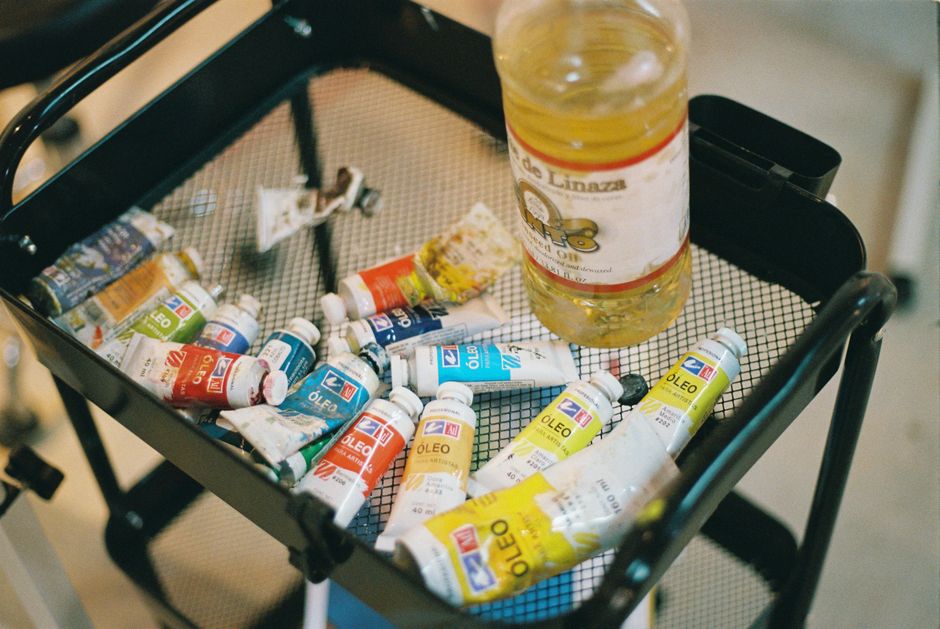
The first time I used linseed oil properly — not just dabbing it on because the tube said to, but actually understanding what it does to pigment — I was working on a small panel, maybe 8 by 10 inches, trying to get a particular quality of light through a curtain. The paint kept drying too fast. I was fighting it. A painter I respected watched me for a while and then said, quietly, "you're not giving it time to think." She handed me the bottle.
What linseed oil does is slow everything down. It extends the drying time, yes, but more than that, it changes the relationship between you and the paint. You stop being in a hurry. The medium won't let you. And in that slowing, something else happens — you start to see what you're actually doing instead of what you're trying to do.
I've been thinking about this because I've been going back through old work lately, and I can tell, almost to the year, when I started using oil mediums correctly. The paintings before have a certain tightness. A grasping quality. The ones after breathe differently. Not better, necessarily — some of the early ones have an urgency I can't replicate now — but differently. More patient with themselves.
The smell is part of it. Scent is the sense most directly wired to memory, which is why the studio smell — linseed, turpentine, the particular dustiness of dry pigment — can drop you back into a specific afternoon from years ago. I have a memory of painting in a rented studio in a building that used to be a textile factory. The light came in at a low angle in the afternoon. The smell of that room was linseed and old wood and something metallic I never identified. When I smell linseed now, I'm sometimes briefly back there, looking at a canvas that I thought was finished and wasn't.
There's a craft in knowing when you're getting it right. Not the painting — the relationship with the medium. When the paint moves the way you want it to, when the brush leaves the mark you intended and not the mark you settled for, there's a physical sensation that's hard to describe. A kind of rightness. The smell of linseed oil, for me, is the smell of that possibility. The moment before you know whether it's going to work.
I've been reading about how fine art process gets documented — or doesn't. Most painters don't write about the sensory experience of making. They write about ideas, influences, theory. The smell of the studio, the weight of the brush, the specific resistance of a particular canvas — these things get left out. But they're where the work actually lives.
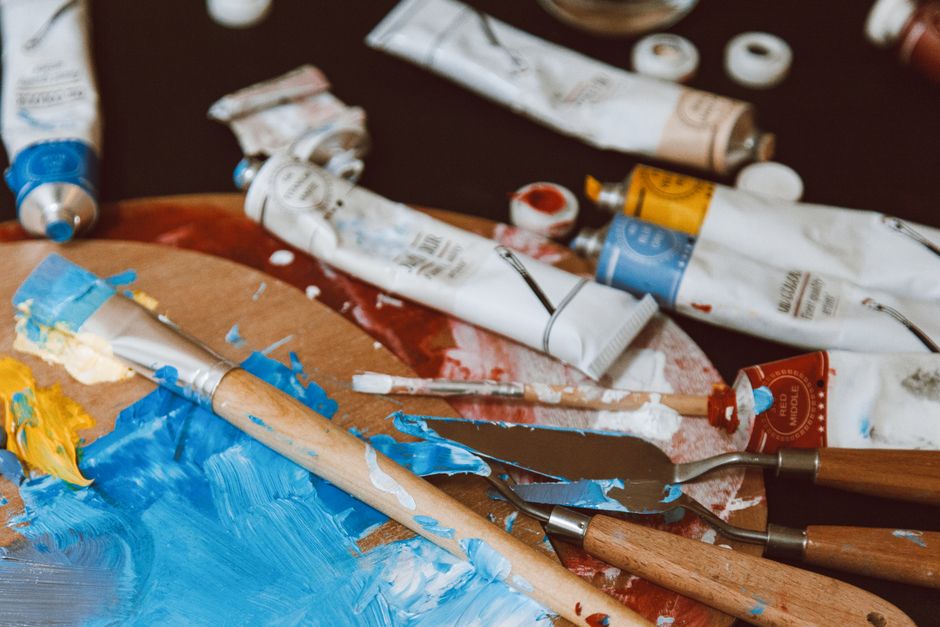
The creative community I've been part of for the last few years has been slowly changing this. People are talking more about the physical experience of making. Not in a precious way — more like: this is what it actually feels like, and that matters. The maker mindset that I find most useful is the one that pays attention to the body's knowledge, not just the mind's.
Linseed oil goes rancid if you leave it too long. The smell changes — it gets sharper, more insistent. I've thrown out bottles that sat unused for too long. There's something in that. The medium has its own timeline. You can't stockpile it and use it later. You have to work with it when it's ready, which means you have to be ready too.
The handcraft and texture of oil painting is inseparable from its chemistry. The smell is chemistry. The drying time is chemistry. The way pigment suspends in oil and then slowly oxidizes into something permanent — that's chemistry. But it doesn't feel like chemistry when you're in it. It feels like a conversation with a material that has its own opinions about what it wants to become.
I'm working on a series now that's all about surfaces — not what's depicted, but the surface itself. The way paint builds up over multiple sessions. The way linseed oil, applied in thin layers, creates a depth that's almost geological. You can see time in it. Each layer is a day, or a week, or a month. The smell of the studio is the smell of that time accumulating.
When I'm finally getting it right — when the medium is doing what I want and the painting is becoming what it needs to be — the smell of linseed oil is the smell of that. Not success, exactly. More like: alignment. The moment when you stop fighting the material and start working with it. That's what the smell means to me now. Eleven years in, and it still stops me.