Every painter has one. The brush that should have been thrown out years ago — splayed, stiff, wrong for everything — that somehow makes the truest marks. Mine is a size 8 filbert that lost its shape sometime around 2019. The bristles splay out at the tip like a bad haircut. It holds almost no paint. It drags.
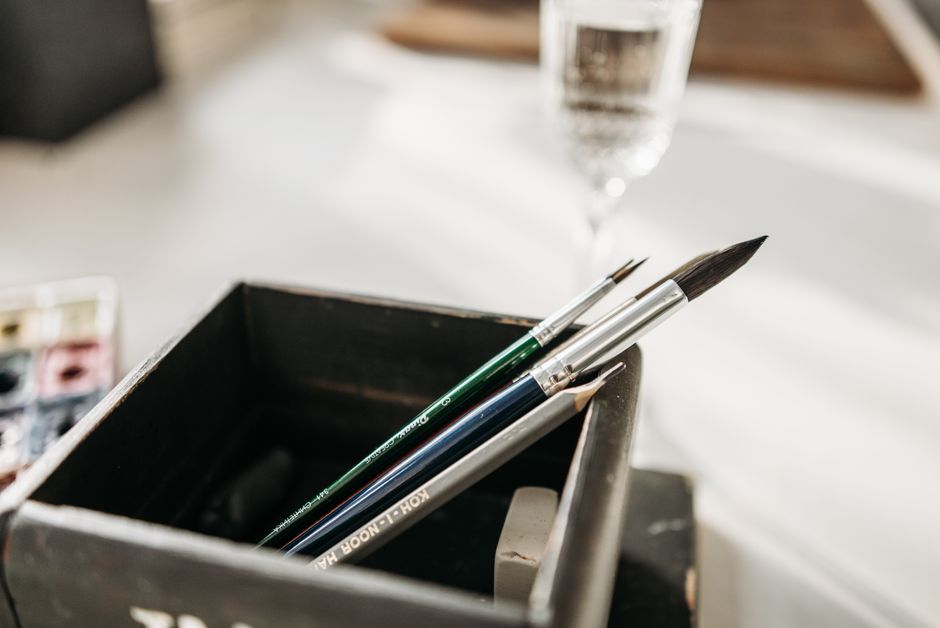
I keep it because of what it does to edges. When I want a clean edge, I use a proper brush. When I want an edge that looks like something actually happened there — like the light caught it wrong, or the paint was still wet, or the painter's hand was uncertain — I use the bad brush. It gives me that for free.
There's something in the resistance. A brush that does exactly what you want is a tool. A brush that fights you a little is a collaborator. The marks it makes carry the negotiation. You can see it in the paint — the slight drag, the uneven load, the place where the bristles separated and left a gap. That gap is information. It tells you something about the surface, about the pressure, about the moment.
I've read about painting process enough to know that most advice says to use the right tool for the job. And mostly that's correct. But the right tool for the job of making something feel alive is sometimes the wrong tool for everything else. The fine art studio work I admire most has this quality — a slight wrongness in the marks that makes them feel inhabited.
The bad brush forces a kind of honesty. You can't be precious with it. You can't fuss. You put paint on it and you make a mark and the mark is what it is. There's no going back to refine it because the brush won't let you refine anything. It's too unpredictable for that.
I think about daily practice a lot — the idea that showing up consistently matters more than showing up perfectly. The bad brush is a daily practice tool. It keeps me from trying to be perfect. It keeps me in the work instead of above it.
The best marks I've made in the last year came from that brush. Not because I planned them. Because I stopped planning and let the brush do what it does. There's a lesson in that. I'm still learning it.
If you have a bad brush, don't throw it out. Put it somewhere you can reach it. Use it when you're being too careful. It knows something you don't.
The places worth finding beauty in unexpected places are usually the ones you weren't looking for. Same with marks. Same with brushes.