The Brush You Ruined and Why You Still Reach for It
The bristles splay wrong. The ferrule is loose — you can feel it shift when you press down, a tiny give that shouldn't be there. It holds paint unevenly, releasing too much at the tip and almost nothing at the heel. By any reasonable measure, this brush is finished.

You still reach for it first.
There's a particular smell to an old brush that's been through oil paint and mineral spirits too many times — something between lanolin and turpentine, a smell that lives in the heel of the bristles where cleaning never quite reaches. It's not pleasant exactly. But it's familiar in a way that newer brushes aren't, and familiarity in the studio is its own kind of comfort.
What a Ruined Brush Knows
The thing about a damaged brush is that it has a history. Every splay in the bristles is a record of pressure applied, of a particular gesture made too many times in the same direction. The brush has learned your habits. It bends toward the way you hold it, the angle you favor, the amount of force you use when you're uncertain versus when you're sure.
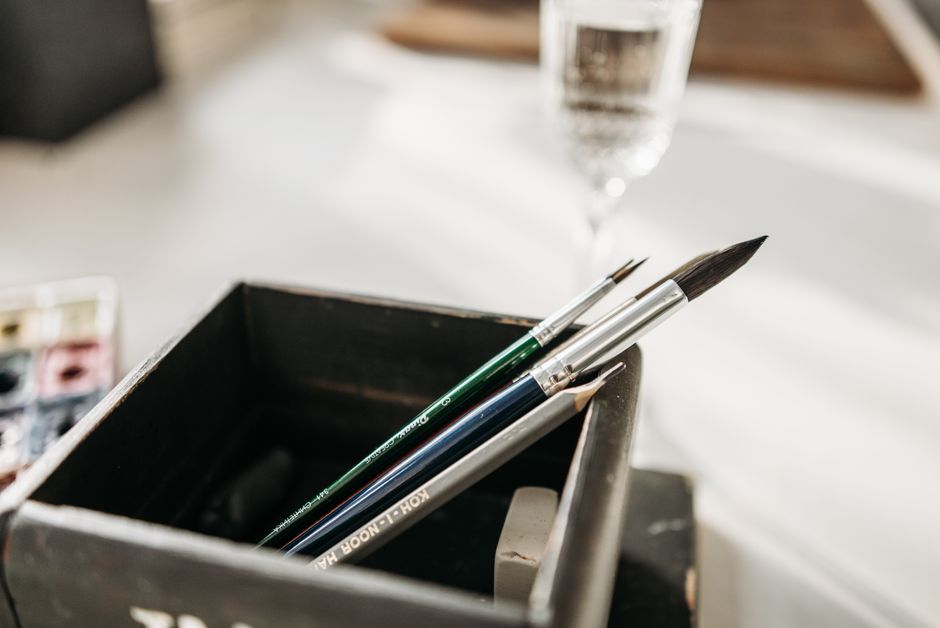
A new brush doesn't know any of that. It responds to you generically, the way a stranger would. The ruined brush responds to you specifically.
Mira keeps three brushes she should have thrown away years ago. One is a flat that she used for a series of large canvases in 2019 — the bristles are permanently fanned, which makes it useless for anything precise but extraordinary for dry-brushing texture across a surface. One is a round that lost half its bristles to a bad cleaning session; what's left makes a mark that no intact brush can replicate. The third is just old. Old in the way that means it's been through enough that it's stopped trying to be anything other than what it is.
The Texture of Accumulated Use
There's a concept in Japanese craft culture — wabi-sabi — that finds beauty in imperfection and impermanence. But that's not quite what this is. The attachment to a ruined brush isn't aesthetic appreciation of its damage. It's something more practical and more personal: the brush has been shaped by your specific way of working, and that shaping is irreplaceable.
You can find good writing about this kind of thing at the brushedpast archive, where the focus tends to be on exactly this — the material life of a studio, the objects that accumulate meaning through use. There's also something in the fine art process writing that touches on how painters develop relationships with their tools over time, relationships that are harder to explain than they are to feel.
When to Let Go
The honest answer is: you probably know. The brush that's ruined in a useful way — the one that makes marks you couldn't make otherwise — is different from the brush that's just ruined. The second kind is a liability. It holds too much paint in the wrong places, it drags when it should glide, it introduces errors you then have to correct.
But even that brush is hard to throw away. Because throwing it away means admitting that the relationship is over, that whatever you made together is finished. And painters, in general, are not good at finishing things.
The morning intention of a studio practice is partly about this — about deciding, each day, what you're bringing to the work and what you're leaving behind. Sometimes the ruined brush is what you bring. Sometimes it's what you finally leave.
The Replacement Problem
When you do replace a brush — when you finally accept that the old one is past its useful life — there's a period of adjustment that nobody talks about. The new brush is technically better. It holds paint correctly, releases it evenly, responds predictably. And for a while, everything you make with it looks slightly wrong.
Not wrong in a way anyone else would notice. Wrong in the way that only you can feel — the mark is slightly different from what you expected, the gesture lands a little off from where you aimed. The new brush doesn't know you yet. You have to teach it.
That teaching takes time. Months, sometimes. And somewhere in that process, you stop reaching for the old brush. Not because you decided to. Just because the new one has started to learn.
There's something worth reading in the slow travel writing about this — the way a place becomes familiar not through intention but through repetition, through the accumulation of small experiences until the unfamiliar becomes the known. Tools work the same way. You don't decide to trust a brush. You just use it until you do.
What the Ruined Brush Is Actually For
Keep it. Not forever, but for now. The ruined brush is a record of where you've been — the paintings you made, the gestures you repeated until they became instinct, the pressure you applied when you were uncertain and when you were sure. It knows things about your practice that you've forgotten.
Use it for the work that needs that knowledge. Use the new brush for the work that needs to be taught. And when the ruined brush finally stops being useful in any way — when even its specific wrongness stops producing anything interesting — let it go without ceremony.
It already gave you everything it had.