The Color You Mix When You're Not Thinking
There's a moment in the middle of a long session when the hand stops consulting the eye. You're thinking about something else — the light changing outside, a conversation from last week, whether you turned off the stove — and the brush moves anyway. It picks up a color. It mixes something. And when you come back to yourself, there's a mark on the canvas that you didn't consciously choose.
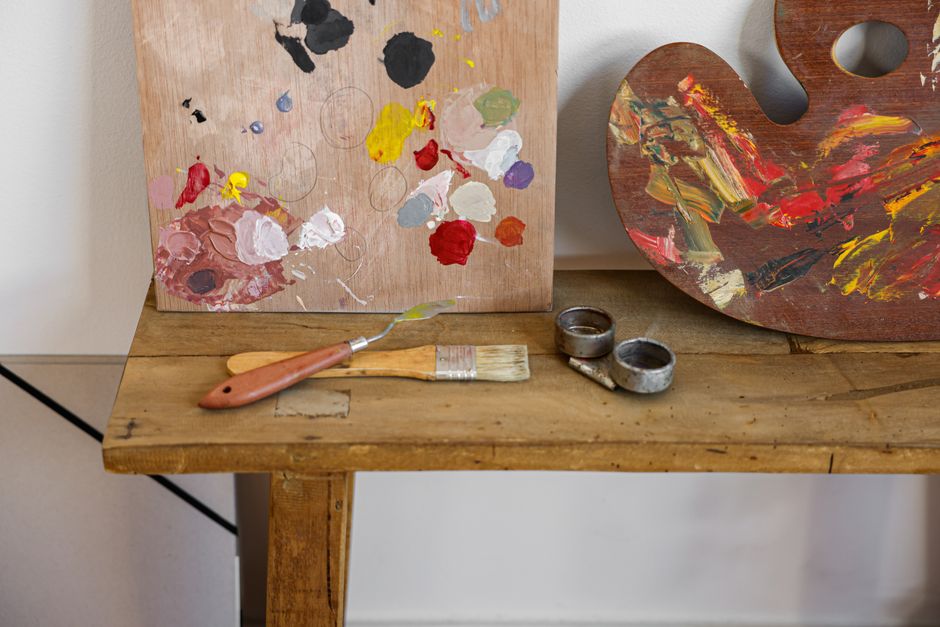
That color is usually more interesting than anything you planned.
I've been paying attention to this for years. The accidental mixes. The colors that happen when I'm distracted, when I'm tired, when I'm talking to someone in the studio and my hands are still working. There's a warmth in those colors that I can't replicate when I'm trying. Something about intention makes the hand cautious. It reaches for the safe version of the color — the one that's already worked before.
What the Unconscious Hand Knows
The painter's eye is trained. It knows what it's looking for. But the hand, when left alone, operates on a different kind of knowledge — accumulated, embodied, not quite verbal. It knows how much pressure makes a certain texture. It knows the weight of a loaded brush versus a dry one. And it knows, somewhere below the level of decision, what color wants to be next to what.
I started keeping a small canvas just for these accidents. Not a palette — a canvas. When I notice I've mixed something without meaning to, I put a swatch of it there. Over months, it's become a record of my instincts. The colors I reach for when I'm not watching myself. They're warmer than I think I am. More ochre. More raw sienna. Less of the cool grays I consciously favor.
The brushedpast archive has a lot of writing about deliberate process — the planned palette, the studied reference. This is the other side of that. The part that doesn't plan.
The Smell of It
There's a specific smell when you mix linseed oil with a color that has a lot of lead white in it. Slightly sweet, slightly metallic. I've started to associate that smell with the moment of not-thinking. It's become a kind of signal — when I catch that smell, I look at what's on the brush. Usually something worth keeping.
Texture changes too. The unconscious hand doesn't scrub. It doesn't overwork. It puts the color down and moves on. The marks are cleaner, somehow, even when the color is muddier. There's a confidence in them that I can't manufacture.
Writers at risen today talk about the value of the unguarded moment — the thought that arrives before you've had time to edit it. Painting has that too. The mark before the judgment.
How to Use This
I'm not suggesting you paint distracted on purpose. That's not the point. The point is to notice what happens when the guard drops — and to trust it a little more than you do.
When you mix something you didn't mean to, don't immediately correct it. Look at it. Ask what it's doing. Sometimes it's wrong. But sometimes it's the color the painting needed and you were too careful to reach for it.
The field notes on seeing from Dean Parish have a line I keep coming back to: the best observations happen when you stop trying to observe. The same is true of color. The best mixes happen when you stop trying to mix.
Keep a record of your accidents. Not to reproduce them — you can't, not exactly — but to understand what your instincts are actually doing when you're not supervising them. That's the painter underneath the painter. The one who knows things you haven't learned yet.
And if you want to see what fine art process writing looks like when it goes deep into the technical side of this — the chemistry of accidental mixes, the pigment interactions that make certain accidents more likely — that's worth reading alongside this.