November has a smell. Not the cold itself — cold doesn't smell like anything, not really — but what the cold does to everything else. The linseed oil in the studio thickens slightly. The turpentine goes sharp in a way it doesn't in summer. The canvas smells like canvas again, not like the warm-weather version of itself that's almost odorless.
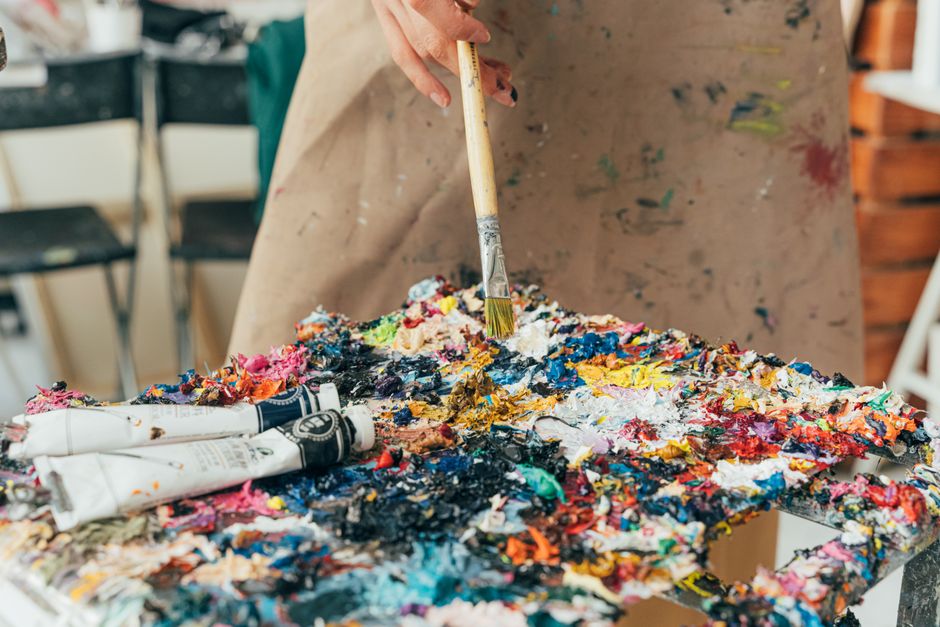
I've been painting in this studio for six years and I still notice it every year. The shift happens sometime in the last week of October. You open the door and the room has changed its mind about what it is.
There's something in the the brushed past archive archive about seasonal painting practice that I keep returning to. The idea that the studio is not a neutral space — that it has its own weather, its own moods, and that the work you make in November is different from the work you make in June not just because of the light but because of everything the season does to the materials and to you.
The light in November is the thing people talk about most. Lower angle. Longer shadows. The way it comes through the north window in the afternoon and turns everything amber for about forty minutes before it's gone. I've tried to paint that light directly and it always fails. The only way to get it is to paint what it does to other things — the way it catches the edge of a jar, the way it makes the white of a canvas look warm.
I read something on fine art process recently about the relationship between season and creative output. The argument was that artists who work in natural light are essentially collaborating with the year. I think that's right. The paintings I make in November have a quality that I can't manufacture in other months. Something to do with the restraint the light imposes.
The linseed oil is part of it too. In summer it dries fast and you have to work quickly. In November it stays open longer. The paint stays workable. You can go back into a passage you thought was done and find it still has something to say. That extra time changes the work. You make different decisions when you're not racing the drying.
There's a piece I'm working on now — a corner of the studio, the north wall, the shelf with the jars and the old brushes — that I've been returning to every morning for two weeks. The creative community community has been talking about repetitive subject practice and I've been thinking about it differently since November started. The subject isn't the point. The light is the point. And the light is different every day.
What I'm learning, again, is that the season is not an obstacle to painting. It's a collaborator. The cold, the smell, the thickened oil, the low light — these are not things to work around. They're the conditions of the work. The paintings that come out of November smell like November. That's not a metaphor. It's almost literal.
More on seasonal studio practice over at field notes — there's a thread there about working in diminishing light that's worth reading if you're in the northern hemisphere and feeling the shift.