The Smell of Rabbit Skin Glue and What It Does to Your Concentration
Nobody warns you about the smell. Rabbit skin glue has this particular animal warmth — not unpleasant, not clean either — that fills a studio and somehow makes you focus harder. I've been sizing canvases for fifteen years and I still stop when the first steam rises off the double boiler.
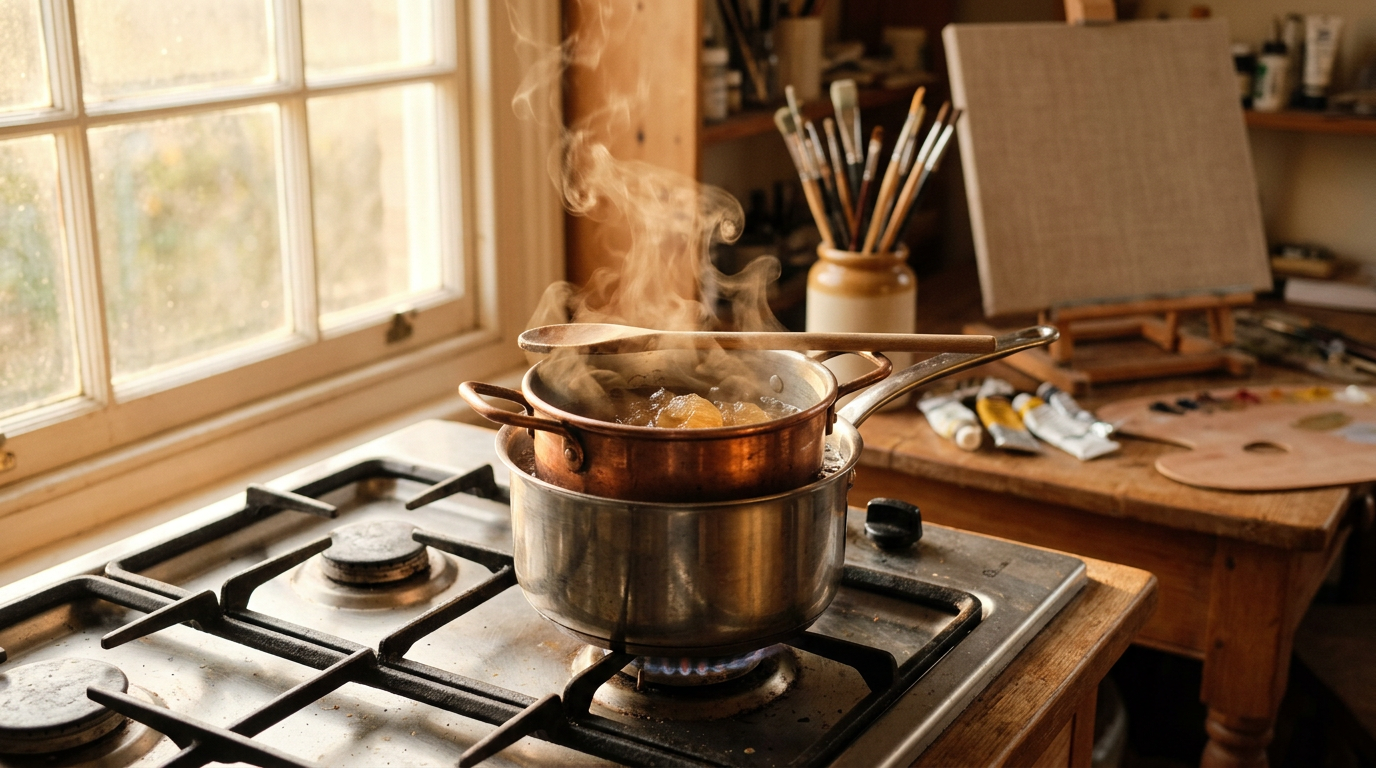
The process is old. Older than most of the techniques we treat as foundational. You dissolve the dried granules in cold water overnight, then heat them gently — never boil — until the liquid runs clear and slightly amber. The smell is the collagen releasing. It's the same protein that holds skin together, and now it's going to hold your ground together.
Why Sizing Still Matters
Acrylic gesso has made sizing feel optional. It isn't. Rabbit skin glue creates a different kind of surface — one that breathes slightly with humidity, that has a particular tooth, that accepts oil paint in a way that feels like the paint is being received rather than just sitting on top. The difference shows up in glazing. It shows up in how the paint moves when you're working wet-into-wet.
I've read the arguments about RSG being unstable over time, about how it expands and contracts with temperature changes and can eventually crack a ground. Those arguments are real. But they're also arguments about centuries-long timescales, and most of us are not painting for the Louvre's conservation department. We're painting for the next ten years of our lives, and within that window, RSG gives you something acrylic gesso doesn't.
The writers at fine art process have been documenting similar material experiments — there's a whole conversation happening right now about what traditional grounds do to contemporary painting practice.
The Ritual of It
There's something about the preparation that changes how you approach the canvas. You've spent an hour making the ground. You've applied it in thin coats, let each one dry, sanded lightly between. By the time you pick up a brush, you're already in a different state than if you'd just grabbed a pre-primed canvas from the art supply store.
I don't think this is mysticism. I think it's attention. The preparation is a form of commitment. You've already invested in this surface before a single mark is made.
The creative community has been talking about this — the way process shapes outcome not just technically but psychologically. How the time you spend before the work begins is part of the work.
Practical Notes
Use 1 part glue granules to 12-15 parts water by weight. Soak overnight. Heat to around 60°C — use a thermometer. Apply warm, not hot. Two thin coats on linen, three on cotton. Let each coat dry completely before the next. Sand with 220-grit between coats if you want a smoother surface.
The smell fades within a day. The surface lasts.
If you're doing field research into historical painting techniques, RSG is one of those materials that connects you directly to how painters worked before the twentieth century changed everything. It's not nostalgia. It's information.
The Brushed Past archive has more on traditional grounds and what they do to contemporary work. Worth reading before you commit to a surface approach.