The Smell Before the Work
There's a moment in winter, when the studio is cold and the radiator hasn't caught up yet, when you open a fresh bottle of linseed oil and the smell hits you before anything else does. It's not pleasant exactly. It's not unpleasant. It's something older than either of those categories.
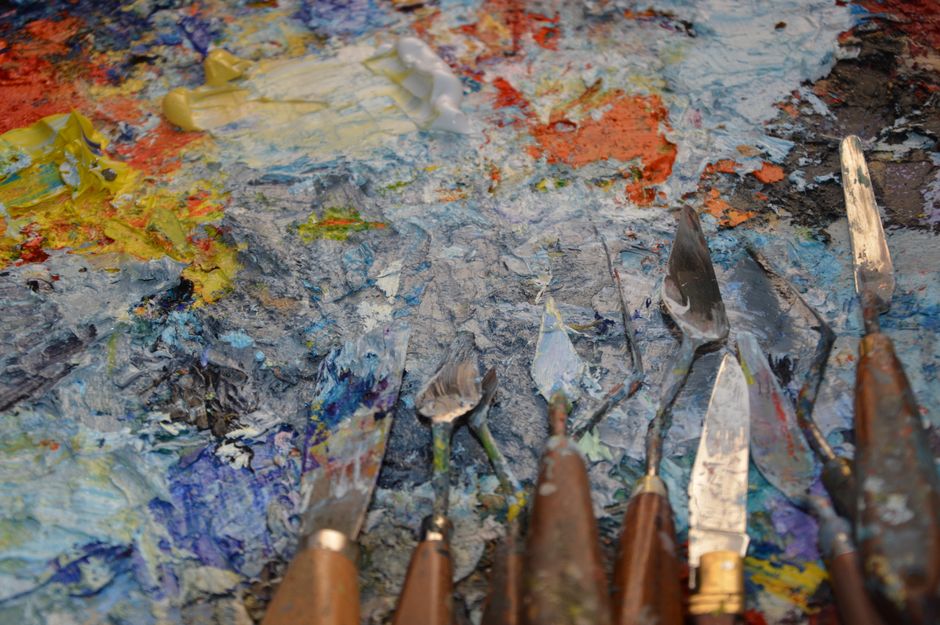
Painters talk about color. They talk about light, about composition, about the specific weight of a loaded brush. They almost never talk about smell. Which is strange, because smell is the sense most directly wired to memory — and painting is, among other things, a practice of accumulating memory in a room.
I've been working in the same studio for six years. The linseed smell is in the walls now. When I walk in on a cold morning, before I've turned on a single light, I know exactly where I am. Not just physically. Temporally. I'm in every winter I've worked here at once.
What the Cold Does
Linseed oil dries differently in winter. Slower. The oxidation process that turns the oil from liquid to solid film takes longer when the temperature drops, which means the smell lingers longer too. A painting you'd expect to be touch-dry in three days might take five. The studio holds the scent for the whole week.
This isn't a complaint. The slowness has its own logic. You can't rush a painting that won't dry, so you work on something else, or you look at what you've done, or you clean brushes more carefully than you would if you were in a hurry. The smell is a kind of enforced patience.
I've read that linseed oil's smell comes from the breakdown of linolenic acid — the same compound that makes flaxseed oil smell the way it does. The chemistry is mundane. The experience is not. There's something about the specific combination of cold air and oxidizing oil that feels like the smell of intention. Like the room knows you're about to do something.
Memory and the Studio
The painter Calitoy Muse once wrote about the way a studio accumulates its own history — not in the paintings that leave it, but in the surfaces that stay. The floor. The walls. The smell. I think about that a lot in winter, when the smell is strongest and the light is worst and the work feels most like work.
There's a kind of comfort in it. The smell means you're here. It means you've been here before. It means the room has absorbed enough of your practice that it smells like practice. That's not nothing. That's actually quite a lot.
If you're building a creative practice of any kind, the creative community around you matters — but so does the room. The physical space that holds the smell of your work. The morning practice that brings you back to it. The accumulation of days that eventually becomes a body of work, whether or not you can smell it.
Come back to Brushed Past for more on the materials and textures of painting practice.